Select the model
Choose voltage and current capability based on the battery string, discharge rate and site limits.

Verify battery capacity with programmable constant-current discharge testing, live monitoring and Excel-ready reports.
PITE3980 is built for capacity, performance, acceptance and compliance discharge tests. It combines stable load control, automatic shutdown logic, wireless/USB data transfer and optional per-cell voltage monitoring with DAC accessories.
Discharge testing is the practical way to verify real battery capacity. PITE3980 maintains the preset current until the test reaches a configured stop condition, giving maintenance teams repeatable results for battery systems, UPS rooms, rectifiers and DC power plants.
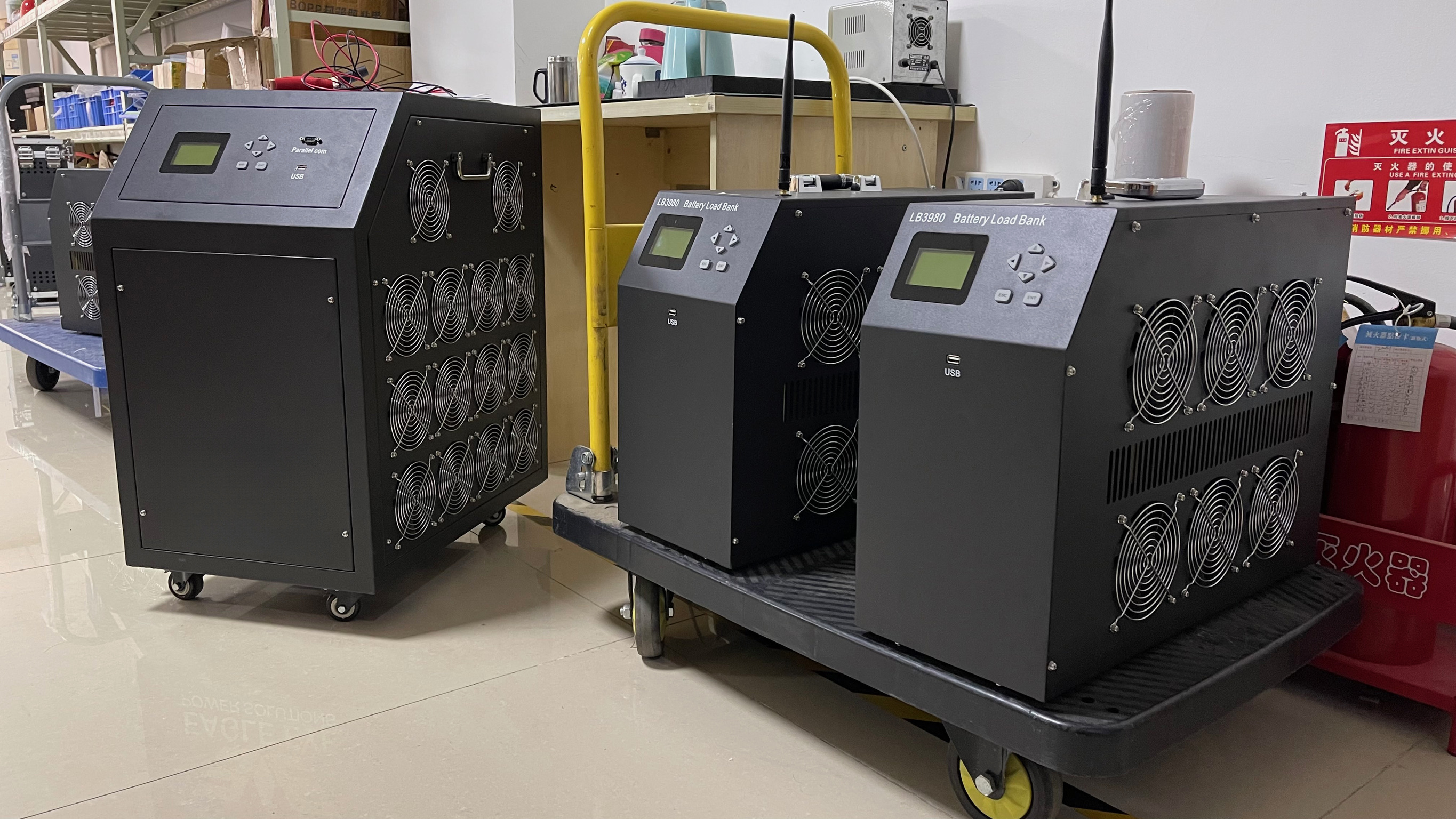
Choose voltage and current capability based on the battery string, discharge rate and site limits.
Connect the load bank to the string, then add optional DAC leads when per-cell voltage is needed.
Configure current, duration, capacity, string voltage and individual cell voltage shutdown limits.
Monitor data live, identify weakest cells and export a structured Excel report for records.
The optional Data Acquisition Case connects to individual cells and communicates back to the load bank wirelessly. This helps teams see which cells collapse first, replace only the cells that need replacement and reduce manual measurement work during long discharge tests.
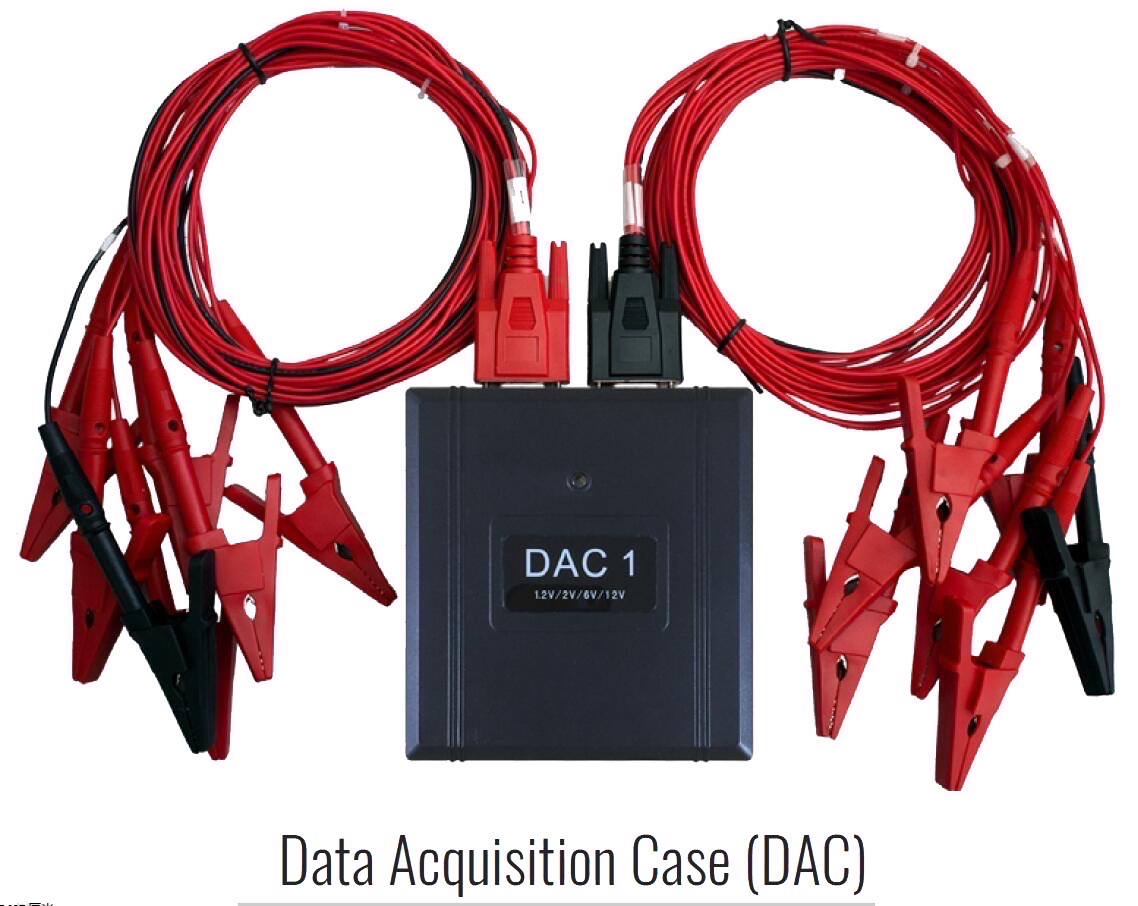
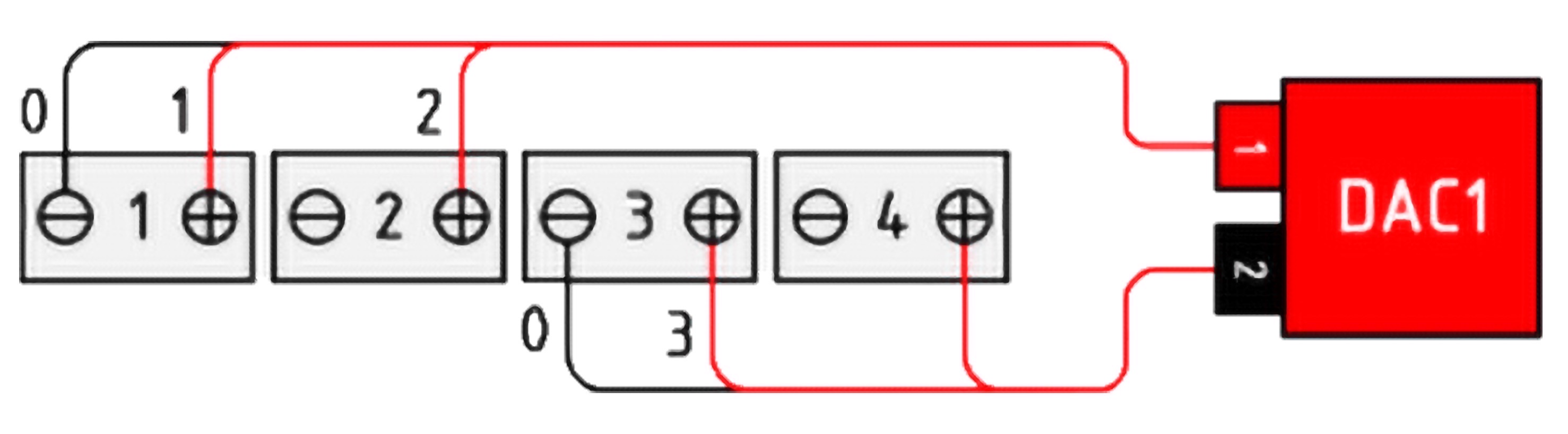
One DAC can monitor four 6V or 12V batteries with positive and negative leads connected across each block.
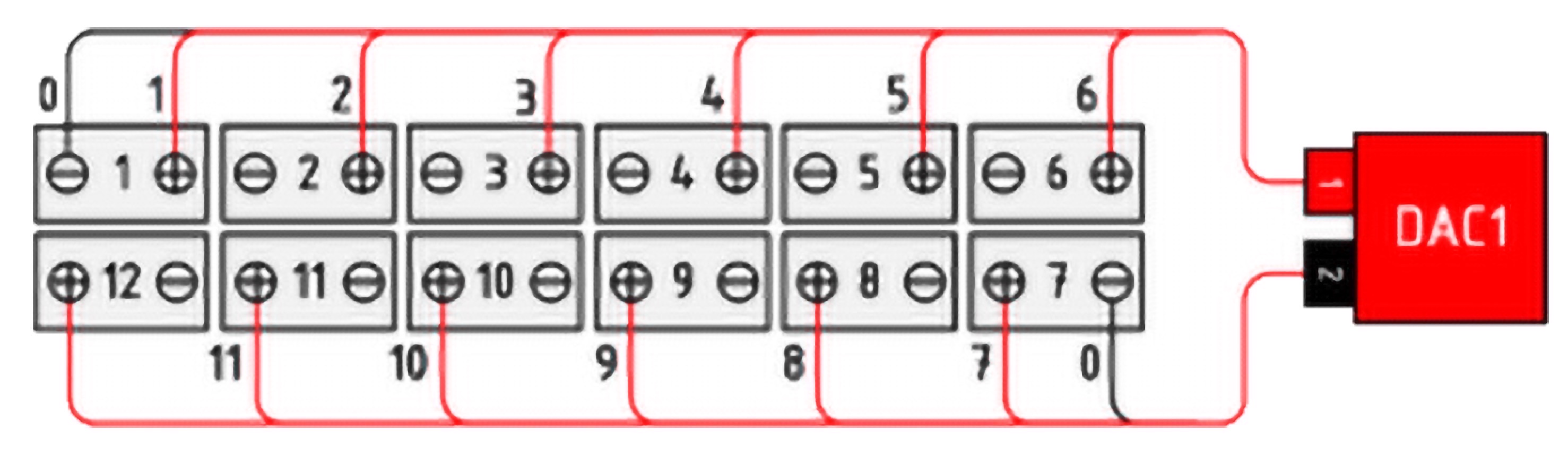
One DAC can monitor up to twelve 2V cells; custom packages are available for uncommon cell arrangements.
DataView can monitor discharge tests in real time or import records from the USB drive. Teams can review group voltage/current, each cell curve, detailed tables and weakest-cell trends before exporting reports to Microsoft Excel.
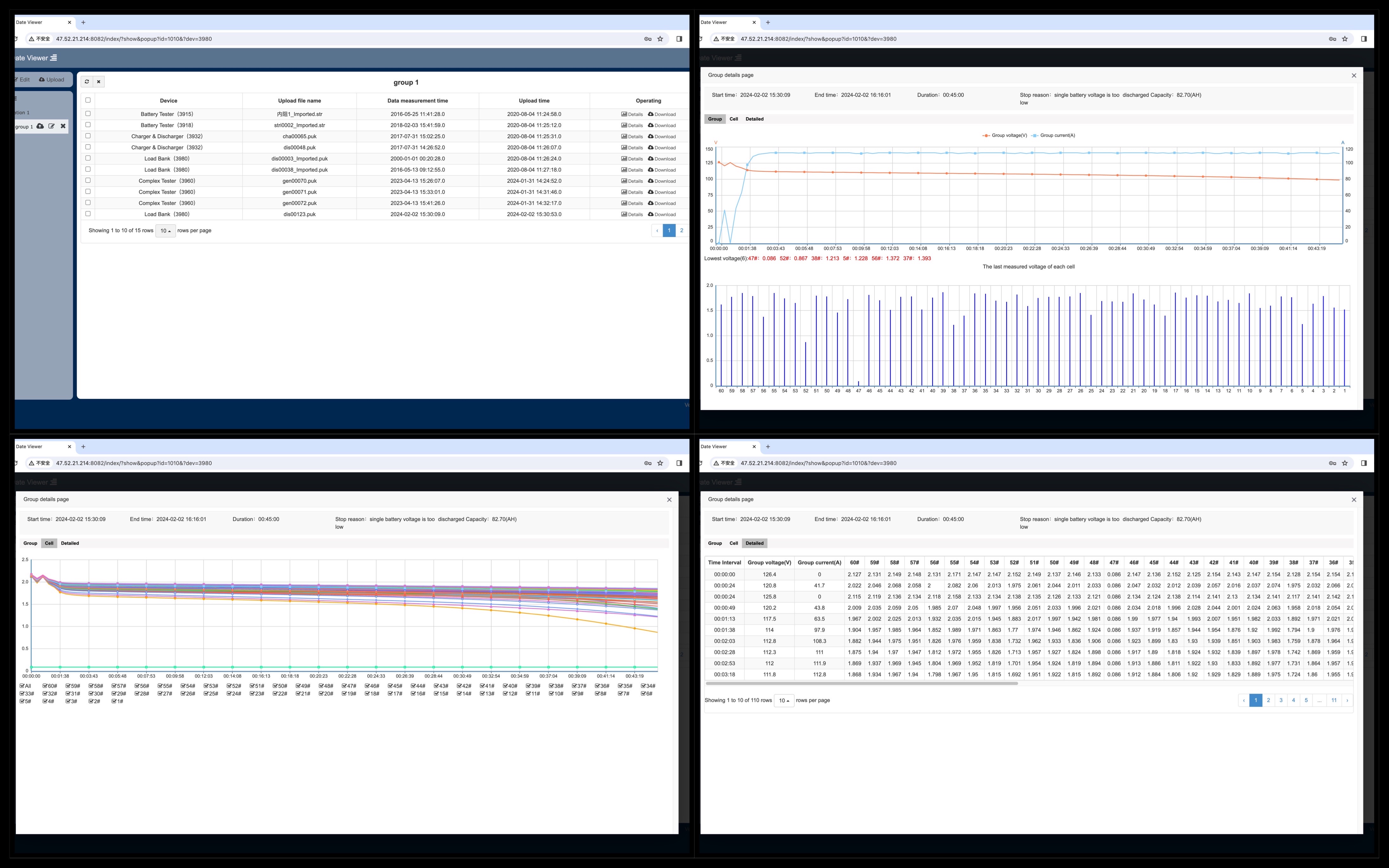
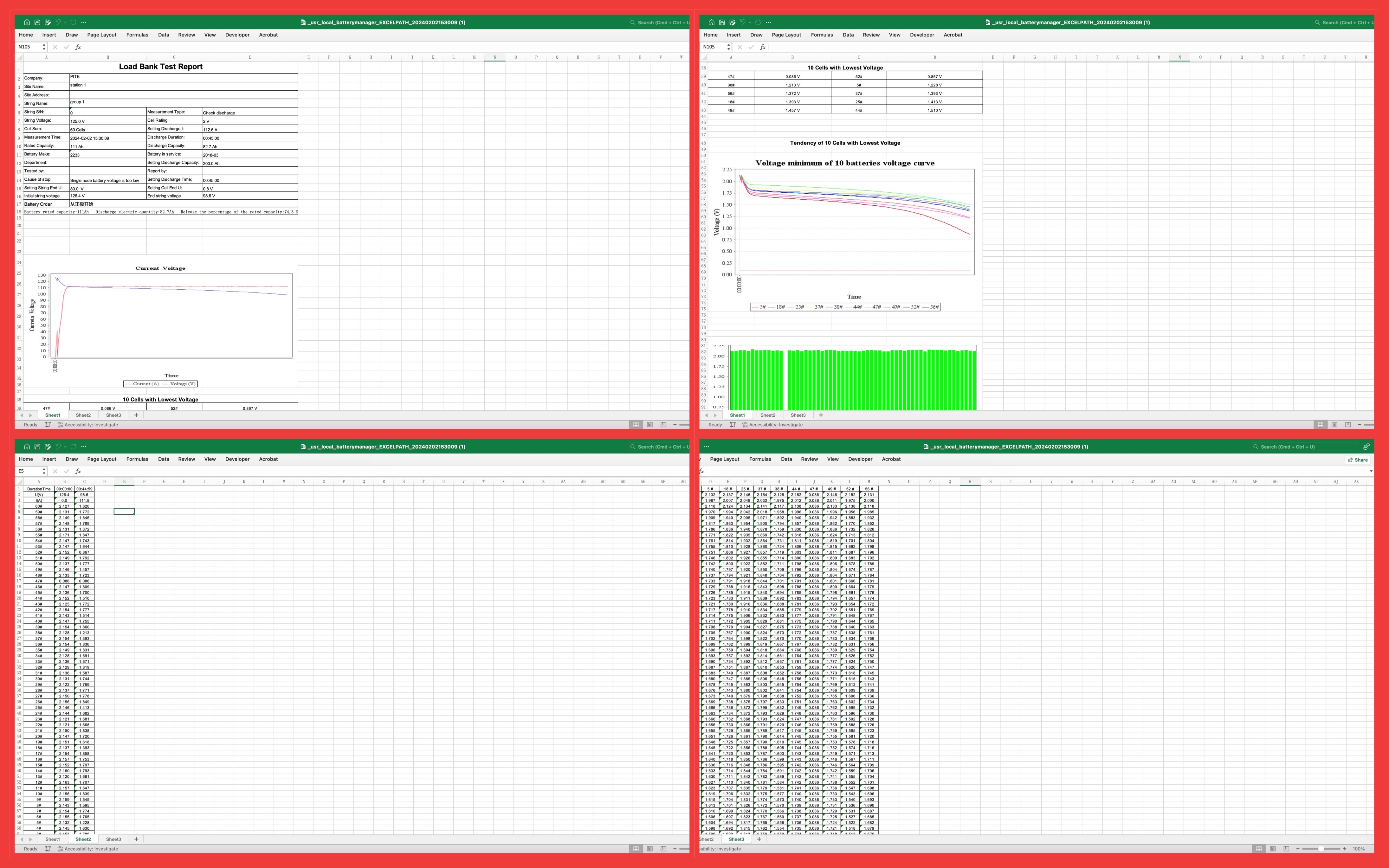
PITE3980 is organized around practical battery work: safe setup, stable discharge, per-cell monitoring, data transfer and reporting.
Key parameters are organized from the PITE3980 product introduction and current product page. Confirm final model voltage, current rating and DAC configuration with PITE before ordering.
| Discharge mode | Constant current; discharge current maintains the preset value until the end of test |
|---|---|
| Cell voltage monitoring | Standard DAC for 2V, 6V and 12V cells; 1.2V and custom DAC options available |
| Discharge current range | Single load: 12-600 A; parallel load: up to 1200 A |
| Discharge voltage range | 10-576 V maximum |
| Voltage steps | 12V, 24V, 36V, 48V, 80V, 125V, 240V, 380V, 480V |
| Accuracy | Discharge current: 1%; voltage: 0.5%-0.8% |
| Resolution | Discharge current: 0.1 A or 0.5%; voltage: 0.001 V |
| Sampling interval | Seconds to 1 minute |
| Data transfer | USB, wireless 466 MHz |
| Display | Backlit LCD |
| Operating environment | 0°C to 40°C (32°F to 104°F) |
| Power requirements | 110/220 VAC 50/60 Hz or DC power from connected batteries |

PITE3980 is supported by a Shenzhen manufacturer with in-house R&D, production, sales and customer service capabilities for intelligent battery and DC power maintenance equipment.
Download the product introduction with model-selection guidance, DAC wiring concepts, software visuals and technical specifications.
These answers summarize the current product guidance for battery maintenance and capacity testing teams.
Choose the model by the battery string voltage and the discharge current you need. For example, select a 48V model for a 48V battery pack and choose the current rating from the target discharge rate.
Yes. PITE3980 includes DataView software for live monitoring, test-data review and exporting discharge reports to Microsoft Excel.
Optional DAC accessories connect to the cells with a wiring harness and communicate wirelessly back to the load bank, allowing each cell or block voltage to be recorded during the discharge.
Yes. Assistant discharge mode helps add current capacity and individual cell monitoring when working with existing non-LB load bank equipment.
The exact power consumption depends on model and discharge current. The product page guidance notes that external AC power is 110/220 VAC, 50/60 Hz, and the draw is normally below 9 A at maximum current.